
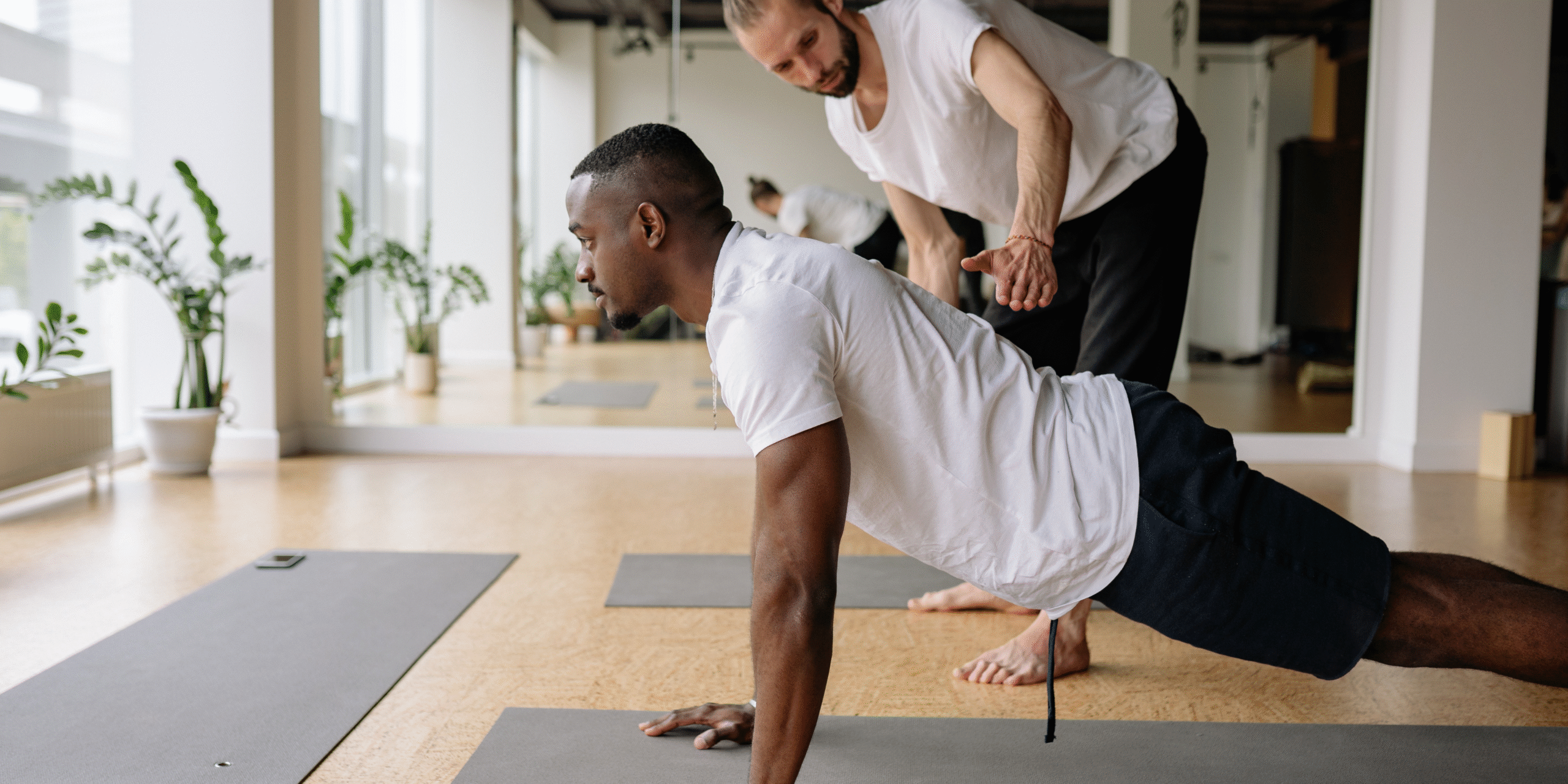
If you have started searching for how to properly perform a push up for a 30 day program, you are probably after something simple, effective, and realistic. The good news is that the push up is one of the most useful bodyweight exercises you can learn. It builds upper body strength, trunk control, and movement confidence without needing much space or equipment.
The challenge is that many people rush straight into repetitions before they learn good technique. That often leads to sore wrists, tight shoulders, an aching lower back, or frustration when the movement feels harder than expected. If you are a busy professional fitting training around work, family, and everything else, you want an approach that works and feels sustainable.
A well structured 30 day challenge can help you build strength and consistency, but only if you focus on quality first. In this article, we will show you how to properly perform a push up for a 30 day program, why technique matters, and how to progress safely so you can get stronger without burning out.
What Is A Push Up And What Counts As Good Form?
A push up is a full body strength exercise where you press your body away from the floor using your chest, shoulders, triceps, and trunk muscles. Although it looks like an upper body move, a proper push up also relies on core tension, hip control, and good shoulder mechanics.
Good form means your body moves as one strong line from head to heels, your hands are set in a stable position, and your chest lowers with control before you press back up. It does not mean forcing yourself into a full floor push up on day one.
One of the biggest myths is that knee push ups or incline push ups are somehow not real push ups. They absolutely are. Regressions are smart training tools. They help you practise the right pattern while building enough strength to progress.
Why Push Up Form Matters
If your goal is to build strength, improve fitness, or support healthy routines for professionals, technique matters more than chasing numbers.
Good push up form also helps reduce unnecessary stress on your joints. When your hips sag, elbows flare too wide, or neck juts forward, the load shifts away from strong positions and into less efficient ones. Over time, poor mechanics can make training uncomfortable and harder to stick with.
There is also a behavioural benefit. A 30 day challenge works best when it is achievable. According to the Australian Government physical activity guidance, regular movement supports physical and mental health. Small, repeatable sessions often beat occasional all out efforts. That is especially true when your workdays are busy and energy is limited.
How To Properly Perform A Push Up For A 30 Day Program
1. Set Up Your Start Position
Place your hands slightly wider than shoulder width apart, with fingers spread and middle fingers pointing forward or slightly out. Stack your shoulders over your hands. Step your feet back so your body forms a straight line.
This setup creates a strong base and helps distribute force through your hands, shoulders, trunk, and legs. Think of pushing the floor away before you even begin.
Tip: If the floor version feels too hard, start with your hands on a bench, desk, or kitchen counter. Incline push ups are ideal for learning control.
2. Brace Your Core And Glutes
Before you lower, lightly tighten your stomach and squeeze your glutes. This helps stop your hips from sagging and keeps your ribs from flaring.
A push up is basically a moving plank. If your trunk loses tension, your shoulders and lower back often pay the price.
Tip: Imagine you are trying to keep a straight line from the back of your head to your heels. Filming one set from the side can make this much easier to check.
3. Lower With Control
Bend your elbows and lower your body as one unit. Aim for your chest to move toward the floor while your elbows track on roughly a 45 degree angle from your torso.
This position usually feels stronger and more shoulder friendly than letting your elbows fly directly out to the sides.
Tip: Think chest first, not chin first. If your head reaches the floor long before your chest, you are probably losing alignment.
4. Press Back Up Strongly
Push the floor away until your elbows are straight but not aggressively locked. Keep your body rigid as you return to the top.
The upward phase should be smooth and controlled. If your hips rise first or your lower back arches, the variation may be too advanced for now.
Tip: Exhale as you press up. Many people find this helps create better trunk tension and rhythm.
5. Choose The Right Progression
If you are wondering how to properly perform a push up for a 30 day program, this is where most success is won. Start at a level where you can complete clean repetitions with one or two reps left in the tank.
Your options include:
- Wall push ups
- Incline push ups on a bench or desk
- Knee push ups
- Floor push ups
- Tempo push ups with a slow lowering phase
Tip: It is better to do 6 excellent incline push ups than 20 messy floor push ups. Quality creates progress.
6. Follow A Simple 30 Day Structure
You do not need to max out every day. A better approach is to alternate effort and recovery so your body can adapt.
Here is a simple example:
- Days 1 to 5: 3 sets of 5 to 8 reps at an appropriate level
- Days 6 to 10: 3 sets of 6 to 10 reps
- Days 11 to 15: 4 sets of 6 to 10 reps
- Days 16 to 20: Progress to a harder variation if form is solid
- Days 21 to 25: Add a slow 3 second lower on each rep
- Days 26 to 30: Test your best clean set, then repeat 2 to 3 support sets
Take at least one lower intensity or rest day every few days. Recovery matters just as much as effort. If you want more insight into recovery and training balance, How To Speed Up Recovery and How Much Exercise Is Too Much are useful reads.
7. Watch For Common Mistakes
The most common errors are flared elbows, dropped hips, half range reps, shrugged shoulders, and holding your breath for too long. None of these mean you have failed. They simply mean the movement needs adjusting.
Tip: If your form slips, stop the set. Clean reps build strength. Tired, messy reps mostly build frustration.
8. Support Your Training With Recovery Basics
Strength improves between sessions, not just during them. Sleep, protein intake, hydration, and stress management all shape how well you adapt. The CDC physical activity guidance and wider exercise science both reinforce the value of regular training supported by recovery.
What Can Employers Do?
- Normalise short movement breaks: Encourage brief exercise snacks during the workday so staff can build strength without needing a full gym session.
- Promote safe progressions: Share guidance that beginners can start with wall or desk push ups rather than pushing through poor form.
- Support recovery habits: Back training challenges with education on sleep, workload, and stress management, especially during high pressure periods.
- Create a culture of consistency: Team based movement challenges can improve engagement when they focus on participation and technique, not just competition.
- Invest in expert support: Structured wellbeing programs can help teams build practical, evidence informed movement habits that actually last.
For workplaces, the return is not just physical health. Regular movement can support energy, focus, morale, and performance. Better Being explores this further in Exercise Employee Performance Enhancing Wellbeing and How To Prioritise Exercise In The Workplace.
Key Takeaways
- If you want to know how to properly perform a push up for a 30 day program, start with form, not ego. A strong setup and controlled movement matter more than high reps.
- The right push up variation depends on your current strength. Wall, incline, and knee push ups are all useful stepping stones.
- A good 30 day challenge includes progression and recovery. You do not need to train to failure every day to improve.
- Common mistakes like sagging hips and flared elbows usually mean you need better tension or an easier variation. That is normal and fixable.
- For busy professionals, short consistent sessions are often the most effective approach. Simple movement habits can support strength, confidence, and energy at work.
- For workplaces, structured movement support can improve participation, wellbeing, and performance when it is practical and inclusive.
If you are ready to build healthier movement habits that work in real life, get in touch with Better Being for tailored support.


