
Employee wellbeing programs are an important part of building healthier, happier and more productive Australian workplaces. However, creating a program that genuinely supports employees requires more than organising an occasional wellness activity or recognising a national awareness day.
For HR managers, People & Culture teams and business leaders, the challenge is developing a consistent approach that meets the needs of employees while remaining practical to deliver.
Whether you’re introducing a wellbeing program for the first time or looking to strengthen your existing strategy, this guide explores how to create meaningful initiatives, encourage employee engagement and build a sustainable approach to workplace wellbeing.
What Are Employee Wellbeing Programs?
Employee wellbeing programs are structured initiatives designed to support the physical, mental and social wellbeing of employees. They provide opportunities for people to access reliable information, develop healthy habits and feel supported throughout their working lives.
Depending on the needs of your organisation, a wellbeing program may include:
- Mental health awareness and education.
- Stress management and resilience workshops.
- Movement and physical activity initiatives.
- Nutrition and healthy eating education.
- Sleep, fatigue and recovery resources.
- Social connection and team engagement activities.
- Leadership education and wellbeing conversations.
An effective program recognises that wellbeing is influenced by both individual habits and the working environment. It should complement supportive leadership, healthy workplace practices and appropriate management of work health and safety risks.
Why Employee Wellbeing Programs Matter
Employees face a range of challenges that can influence their wellbeing, from demanding workloads and financial pressures to fatigue, isolation and competing personal responsibilities.
While employers cannot remove every challenge employees experience, they can create environments that make it easier for people to access support, develop healthy habits and maintain meaningful connections.
The World Health Organization’s guidelines on mental health at work recommend organisational interventions, manager training, employee education and individual support as part of a comprehensive approach to workplace mental health.
For Australian employers, wellbeing also needs to be considered alongside workplace health and safety responsibilities. Safe Work Australia provides guidance on managing psychosocial hazards, including excessive job demands, poor support and harmful workplace behaviours.
Wellbeing education and activities can play a valuable supporting role, but they should never replace action to address the underlying causes of workplace stress or psychological harm.
How to Create Effective Employee Wellbeing Programs
Creating a successful wellbeing program starts with understanding your people. Rather than introducing activities simply because they are popular, consider what your employees need, how they work and what might prevent them from participating.
1. Understand Your Workforce
Every workplace is different. An organisation with employees working across multiple operational sites will have different needs from a business with a predominantly office based workforce.
Gather insights through employee surveys, team discussions, existing engagement data and consultation with workplace representatives.
Consider which wellbeing topics employees would find valuable, what formats they prefer and whether working hours or locations create barriers to participation.
These insights can help you develop a program that reflects the needs of your workforce rather than relying on assumptions.
2. Establish Clear Wellbeing Objectives
Before selecting activities, identify what you want your program to achieve.
Your objectives might include improving awareness of available support, increasing participation in wellbeing initiatives, strengthening social connection or helping employees develop sustainable health habits.
Start with a manageable number of objectives and identify how you will measure progress. Clear objectives make it easier to prioritise activities, allocate resources and communicate the value of your program to senior leaders.
3. Take a Holistic Approach to Wellbeing
Wellbeing is not limited to physical fitness or mental health. Different aspects of health influence one another, which is why a balanced approach can help organisations address a wider range of employee needs.
At Better Being, we approach wellbeing through four key pillars:
- Mindset: Supporting mental wellbeing, managing stress, building healthy habits and strengthening social connection.
- Movement: Encouraging physical activity and helping employees understand the benefits of moving regularly.
- Nutrition: Providing practical education to support balanced eating habits and everyday energy.
- Recovery: Helping employees understand the importance of sleep, rest and sustainable performance.
Including a variety of topics throughout the year creates opportunities for employees to engage with the areas of wellbeing that are most relevant to them.
4. Make Wellbeing Accessible to Everyone
One of the biggest challenges Australian organisations face is reaching employees across different roles, locations and working schedules.
A lunchtime webinar may suit office employees but be difficult for frontline workers, employees working remotely or those on rotating shifts.
Consider offering a combination of live sessions, recorded content, printable resources and short activities that can be incorporated into existing team meetings.
Where possible, provide opportunities for employees to participate during working hours. Wellbeing should feel accessible and supportive, rather than becoming another responsibility employees need to manage outside work.
5. Involve Leaders in Your Wellbeing Strategy
Leaders play an important role in shaping how employees experience workplace wellbeing.
When managers actively support wellbeing initiatives, communicate available resources and demonstrate healthy working practices, they can help create an environment where employees feel more comfortable engaging with the program.
This might involve encouraging appropriate breaks, respecting boundaries, supporting flexible participation or creating opportunities for meaningful team conversations.
Explore the role of leadership in employee wellbeing programs for more insights into building a supportive workplace culture.
Planning Employee Wellbeing Programs for 2027
Consistency is an important part of delivering a meaningful wellbeing program. However, planning activities, sourcing resources and coordinating communications throughout the year can place additional pressure on busy HR and wellbeing teams.
Creating an annual wellbeing calendar helps organisations take a more structured approach. It allows teams to plan ahead, identify relevant health awareness dates and develop activities that connect with their broader wellbeing objectives.
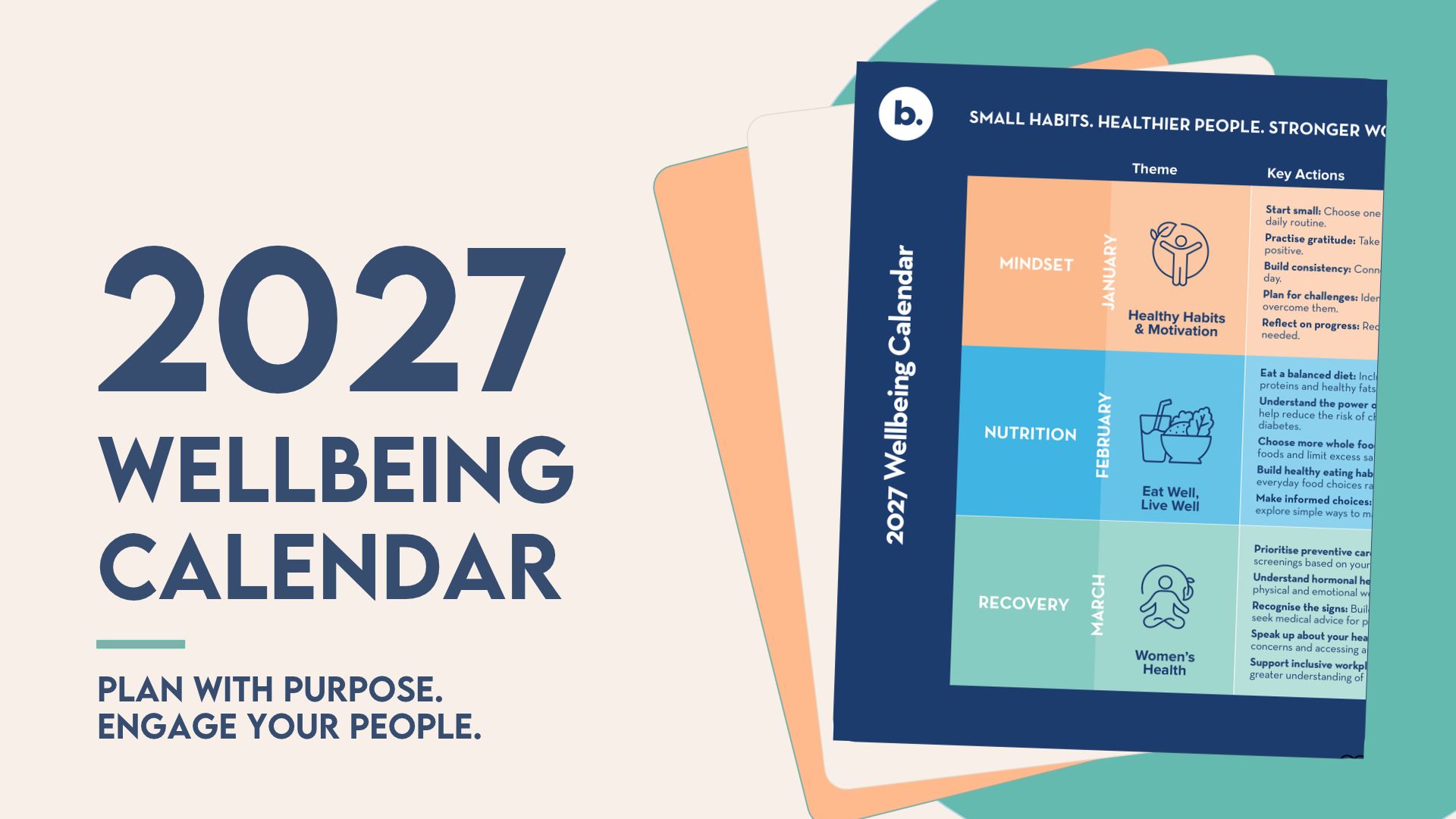
Better Being’s free 2027 Wellbeing Calendar has been designed to make workplace wellbeing planning easier for both corporate and operational workforces.
The calendar includes:
- 12 monthly wellbeing themes covering mindset, movement, nutrition and recovery.
- Key health and wellbeing awareness dates throughout the year.
- Practical employee engagement ideas to bring each monthly theme to life.
- A structured approach to planning consistent wellbeing initiatives across your organisation.
From building healthy habits in January to supporting boundaries, fatigue and recovery in December, the calendar provides a practical starting point for delivering meaningful wellbeing initiatives throughout 2027.
How to Increase Engagement in Employee Wellbeing Programs
Even a well planned wellbeing program can struggle if employees are unaware of available resources or find participation difficult.
Regular communication helps keep wellbeing visible throughout the year. Use existing communication channels such as internal newsletters, team meetings, workplace noticeboards and digital platforms to share upcoming activities and resources.
Keep communications practical and relevant. Explain what employees can expect, how they can participate and why the topic might be useful in their everyday lives.
It is also important to give employees a voice in shaping the program. Asking for feedback and responding to suggestions can help organisations understand what is working and where improvements are needed.
For more practical strategies, read our guide to boosting employee engagement in wellbeing programs.
How to Measure the Success of Your Wellbeing Program
Measuring the effectiveness of a wellbeing program helps organisations understand whether initiatives are reaching employees and providing meaningful support.
Consider tracking a combination of indicators, including:
- Participation: The number of employees engaging with activities, webinars and resources.
- Accessibility: Whether employees across different locations and roles have opportunities to participate.
- Employee feedback: How relevant, practical and useful employees find the content.
- Ongoing engagement: Whether employees continue accessing wellbeing resources throughout the year.
- Wellbeing awareness: Whether employees understand the support and resources available to them.
Review these insights regularly and protect employee privacy when collecting and reporting information. Participation figures alone cannot demonstrate improvements in employee health, but they can provide useful insights into the reach and relevance of your initiatives.
Learn more about how to measure your employee wellbeing program and use insights to inform future planning.
Key Takeaways
- Effective employee wellbeing programs reflect the needs and working environments of employees.
- A holistic approach considers mindset, movement, nutrition and recovery.
- Leadership support and accessible resources can help encourage employee engagement.
- An annual wellbeing calendar makes it easier to plan and deliver consistent initiatives.
- Regular measurement and employee feedback help organisations refine their approach.
- Wellbeing initiatives should complement healthy workplace practices and appropriate risk management.
Better Being helps organisations take a practical and sustainable approach to workplace wellbeing, supporting employees with relevant education, resources and opportunities to build healthier habits.