
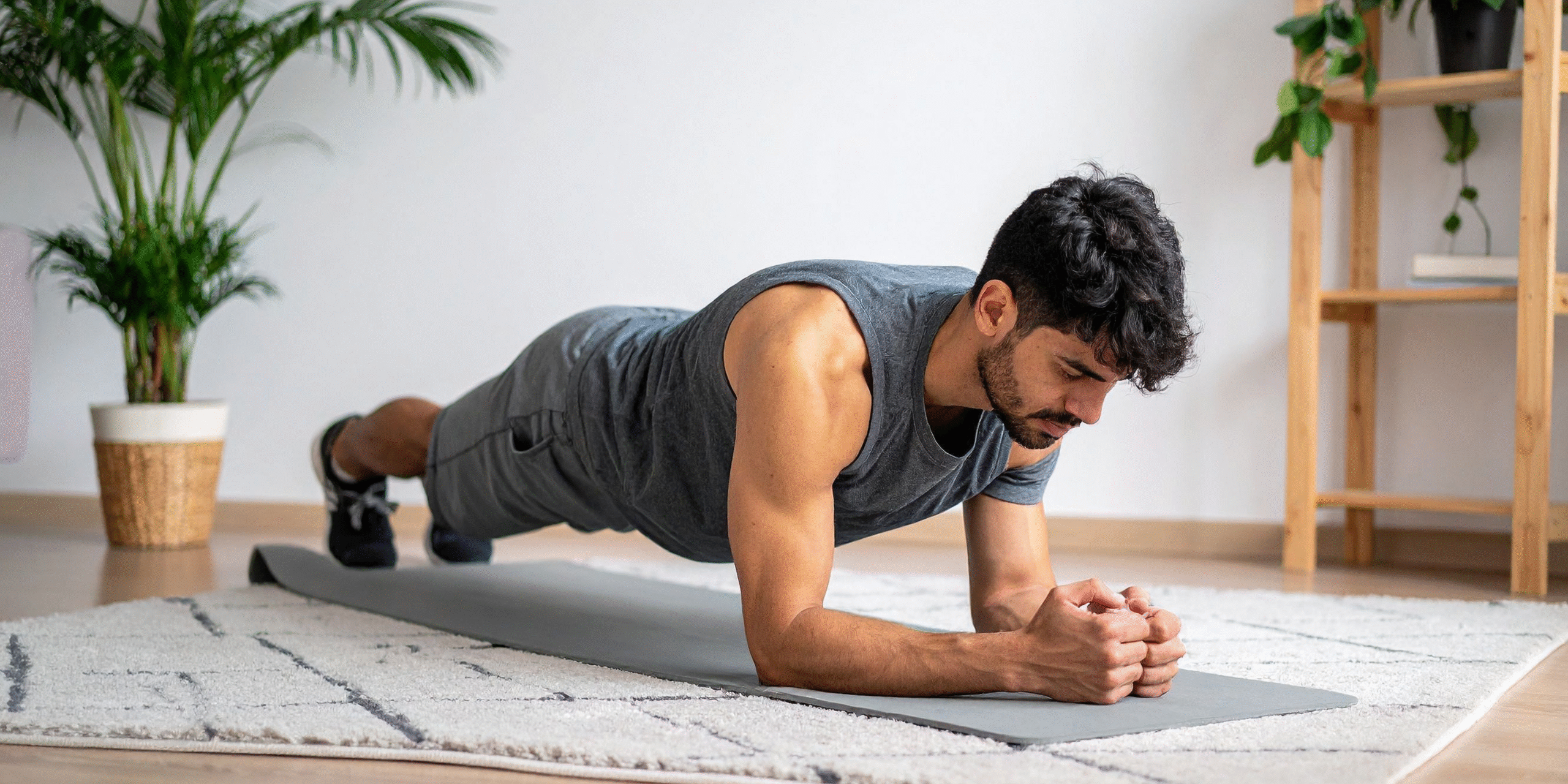
You want a stronger core that shows up in everyday life and sport. Abs exercises is not just about a six pack, it’s all part of men’s health. A strong midsection helps you lift your kids without a tweak, run without your lower back flaring up, and stay active as you age. This guide clears the confusion and gives men a practical plan that fits busy life. You will learn what your core actually does, why it matters for performance and longevity, the common mistakes to avoid, and the exact steps to build a resilient midsection.
What are Abs Exercises?
Abs exercises refers to training the muscles that wrap your trunk. That includes rectus abdominis on the front, obliques on the sides, deep stabilisers like the transverse abdominis, diaphragm, pelvic floor, and spinal erectors in your back. Together they stabilise your spine, transfer force between your upper and lower body, and support breathing and posture.
Think of your core as a pressure cylinder. When you brace and breathe well, you create intra abdominal pressure that protects the spine and lets your hips and shoulders generate power. Good core training balances three movements. Anti extension resisting your lower back arching. Anti rotation resisting unwanted twist. Anti lateral flexion resisting side bend. Crunches alone do not cover these.
Why it Matters
A stronger core supports heart and metabolic health by helping you move more, lift more, and train consistently. Regular physical activity reduces the risk of heart disease and type 2 diabetes. Australian guidelines recommend adults aim for at least 150 to 300 minutes of moderate activity plus muscle strengthening on two days each week. Core strength makes those minutes safer and more effective.
Low back pain is one of the most common reasons for time off work and reduced quality of life. The Australian Institute of Health and Welfare reports back problems affect millions of Australians and are a leading cause of disability. A balanced abs program that trains stability and endurance can reduce risk of flare ups in day to day tasks.
There is also the myth of spot reduction. You cannot burn belly fat from crunches alone. Body fat comes off where your body decides. Calorie balance, protein, sleep and full body resistance training drive most of the change. See our guide on this topic Can you spot reduce body fat.
Abs Exercises Plan
Step 1: Build a simple core baseline – three moves three days a week
Start with short focused sets that train stability. This builds endurance in the deep trunk muscles which protect your back during daily tasks.
- Anti extension: Dead bug or long lever dead bug. Two sets of eight slow reps each side. Exhale as you extend, keep ribs down. This teaches your trunk to resist arching while hips and shoulders move.
- Anti rotation: Pallof press. Two sets of ten seconds holds each side. Cable or band at chest height. This improves control when you carry bags or change direction.
- Anti lateral flexion: Suitcase carry. Two sets of twenty to forty metres each side. Walk tall holding one dumbbell. This strengthens obliques and quadratus lumborum to resist side bend.
Step 2: Progress to integrated strength patterns
Train your core while you lift. Bracing under load builds real world resilience and supports hormonal health by allowing heavier full body work.
- Front squat or goblet squat: Three sets of six to ten. Front loaded positions challenge the anterior core to keep ribs stacked over hips.
- Romanian deadlift: Three sets of six to ten. Teaches hip hinge with neutral spine and strong brace to protect your back.
- Half kneeling single arm press and single arm row: Two to three sets of eight to twelve. Unilateral loading challenges anti rotation.
For a deeper dive on strength for body composition read Resistance training the key to weightloss.
Step 3: Add rotation and power once you have control
Rotation is part of sport and daily life. Train it after you master bracing so you produce and absorb force safely.
- Tall kneeling cable chop or lift: Two to three sets of eight each side. Focus on hips and ribs moving together.
- Medicine ball scoop toss against a wall: Three sets of six each side with full rest. Power improves coordination and athleticism.
Step 4: Use short finishers that target endurance not fatigue
Core endurance supports posture and running economy without flaring your lower back.
- Plank with breathing: Four to six breaths per set for three sets. Aim for long exhales to engage the deep core.
- Side plank or side plank with top leg march: Two sets each side for twenty to forty seconds. Keep a straight line from shoulders to ankles.
- Bike carry complex: Alternate front rack carry and farmer carry for thirty to sixty metres each. Stay tall and calm.
Step 5: Lock in recovery habits to grow stronger between sessions
Muscle adapts when you recover well. Good sleep supports testosterone and growth. Aim for seven to nine hours, as poor sleep impairs performance and focus at work per our post The impact of sleep on employee performance.
- Protein at each meal, about a palm sized serve. Helps repair muscle and manage appetite.
- Daily walking and low intensity cardio. Improves blood flow and aids recovery which supports evidence based performance strategies.
- One to two rest days each week. Quality beats quantity for long term progress.
Sample Weekly Plan Forty Minutes or Less
Keep it flexible so you can win the week even when life gets busy.
- Day one: Strength lower body focus. Warm up then goblet squats, Romanian deadlifts. Core block dead bug and suitcase carry. Optional finisher plank breathing.
- Day two: Conditioning. Brisk walk or intervals on a bike for twenty to thirty minutes. Core block Pallof press and side plank.
- Day three: Strength upper body focus. Single arm press and row. Core block tall kneeling chop and carry. Optional medicine ball if you feel fresh.
If mornings are hard, see The most important time of day for exercise for a practical view on timing.
Technique Cues That Make Every Rep Safer
- Stack ribs over hips. Imagine a quiet zipper from pubic bone to sternum.
- Breathe through your nose when possible and exhale fully on the effort. This builds pressure and engages the deep core.
- Move from the hips and shoulders. Keep your lower back quiet.
- Stop a set when form slips. Quality first prevents flare ups.
Nutrition and Body Composition Myths
Abs are revealed in the kitchen but built under the bar. You do not need extreme diets. Focus on whole foods, protein at each meal, fibre and smart snacks. For a grounded look at quick fix claims read What is the best exercise to tone up and Can you out run your diet.
Pain and Progression
If you have persistent pain or a history of back issues, start with low load stability and build slowly. Replace sit ups with dead bugs, bird dogs and carries. Regress to shorter ranges that do not trigger symptoms. If pain persists, speak with a qualified professional.
Progress one variable at a time. More tension, more range, longer hold or a small load increase. Avoid adding load and speed together in the same week. For more on patient progress without flare ups, read Train without pain.
How Abs Training Supports Men’s Health
Abs exercises is about more than appearance. Stronger posture supports confident body language and breathing patterns that calm your nervous system. Focused sessions create momentum that flows into better food choices and sleep. During busy periods this framework keeps you consistent without long gym visits. For a broader look at mens health choices that compound, see Mens health tipping point five things men can do and Mens Health Week the stats facts and solutions.
Frequently Asked Questions
How often should I train my abs?
Two to four short sessions per week work well. Think ten to fifteen focused minutes at the end of your main lifts.
Do I need crunches?
You can include them if they do not cause back discomfort. Prioritise anti movements and carries first.
Will ab work burn belly fat?
No. Use a balanced plan with resistance training, daily steps, adequate protein and sleep. See our guide on spot reduction for details.
Can I train abs at my desk?
Yes. Focus on posture, breath and light band work. Our quick ideas are in Desk exercises at work.
Key Takeaways
- Abs exercises for men’s health is about a resilient trunk that supports daily life sport and longevity.
- Train stability first then integrate rotation and power for balanced core strength.
- Consistency beats intensity. Short focused blocks two to four times a week are enough.
- Sleep protein and full body lifting drive visible results more than endless crunches.
- Progress slowly and prioritise quality reps to protect your back and build confidence.
If you are ready to build healthy habits that actually last, we would love to help. Get in touch with Better Being for tailored workplace support.